

What Is Neurofeedback?
Neurofeedback is a non-invasive approach designed to support the brain’s natural ability to regulate itself. At Clear Mind Idaho, we use IASIS neurofeedback, a gentle form of neurofeedback that uses extremely low-level signals to encourage more balanced brain function.
Many people explore neurofeedback when they are struggling with things like stress, overwhelm, poor sleep, focus issues, mood challenges, or feeling like their nervous system is stuck in overdrive. Rather than forcing the brain to do something unnatural, neurofeedback is designed to support the brain’s own ability to adapt, self-correct, and function more efficiently.
If you are looking for a gentle, drug-free option that may support better regulation and resilience, neurofeedback may be worth exploring.
What Is IASIS Neurofeedback?
IASIS neurofeedback is a type of microcurrent neurofeedback that uses very small electrical signals—similar in scale to the brain’s own electrical activity—to support healthier patterns of brain function.
During a session, sensors are placed on specific areas of the scalp to read brainwave activity. The system then delivers extremely gentle, targeted microcurrent signals based on what the brain is doing in that moment. These signals are designed to encourage the brain to shift out of unhelpful patterns and move toward better regulation.
At Clear Mind Idaho, IASIS neurofeedback is used as part of a personalized approach focused on calming the nervous system, supporting resilience, and helping clients work toward greater balance in daily life.

How Does Neurofeedback Work?
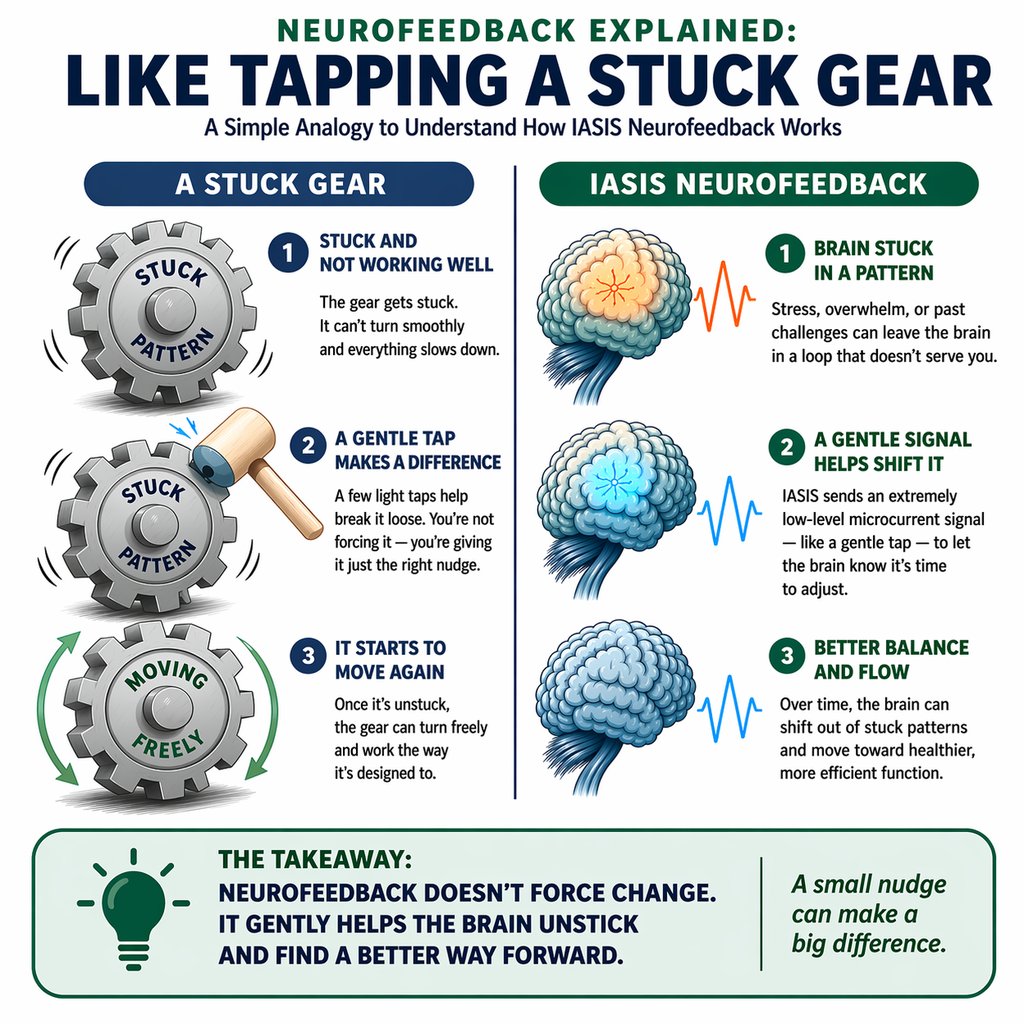
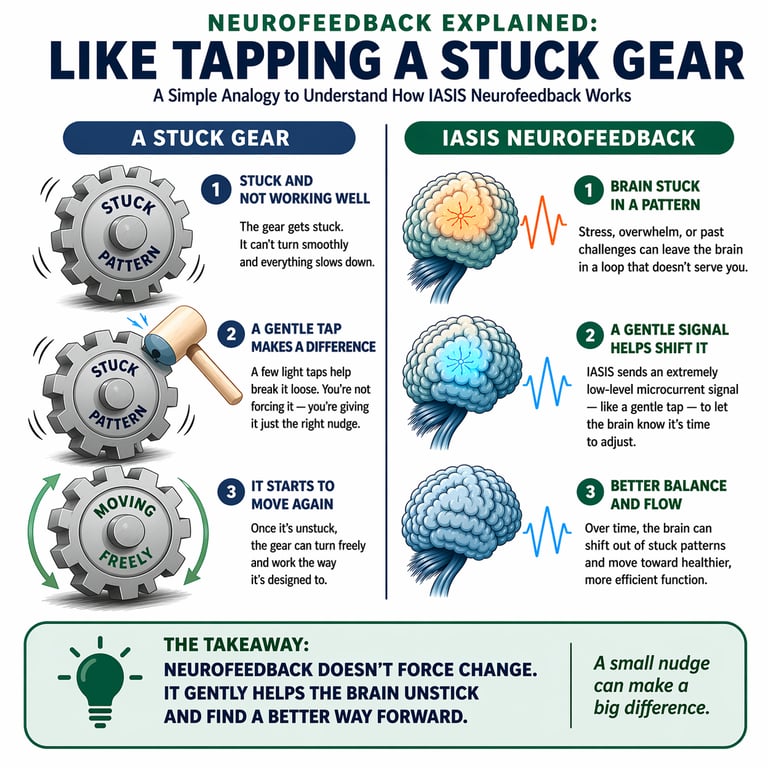
Your brain is constantly processing information, adapting, and responding to stress, this is part of what is referred to as Neuroplasticity. Sometimes, after ongoing stress or other challenges, the brain can get stuck in patterns that are not serving you well. This may show up as feeling anxious, overstimulated, foggy, reactive, exhausted, or unable to fully relax.
IASIS neurofeedback works by measuring brainwave activity and delivering a gentle signal back to the brain. This signal is intended to help the brain recognize its current pattern and make adjustments. Over time, many people report feeling calmer, more clear-headed, and better able to handle everyday stressors.
You can think of it as giving the brain a small nudge toward more efficient self-regulation.
How IASIS Neurofeedback Works
Gentle EEG Sensors Are Placed on the Head
Small EEG sensors are placed on specific areas of the scalp. These sensors allow the system to interact with your brain’s natural electrical activity. The process is completely non-invasive, painless, and sessions typically last only a few minutes.
Ultra-Low Microcurrent Is Delivered
Based on your unique brain waves the IASIS system sends extremely small electrical signals—similar to the brain’s own natural activity. These gentle signals are designed to support the brain’s ability to reset and shift away from patterns of stress or dysregulation.
Neurofeedback supports the brain’s natural ability to self-regulate. Over time, many clients report improvements in areas such as stress response, focus, sleep, mood, and overall mental clarity as the brain becomes more balanced and resilient.
Your Brain Does the Work
IASIS neurofeedback is designed to support healthy brain function and self-regulation. It is not intended to diagnose, treat, cure, or prevent any medical condition.
Measure
Deliver
Support
What to Expect

What Does Neurofeedback Feel Like?
One of the most common questions people ask is whether neurofeedback hurts. The answer is that IASIS neurofeedback is typically described as very gentle.
Most sessions are short and comfortable. Some people feel very little during the session itself, while others notice a sense of calm, relaxation, mental clarity, or subtle shifts afterward. Because the microcurrent used is extremely low-level, the experience is generally not intense.
Every person is different, and responses can vary. Some clients notice changes quickly, while for others the process is more gradual.
You may notice:
A sense of calm or relaxation
Feeling more clear-headed
Improved sleep
Less mental overload
Better ability to handle stress
Who Is Neurofeedback For?
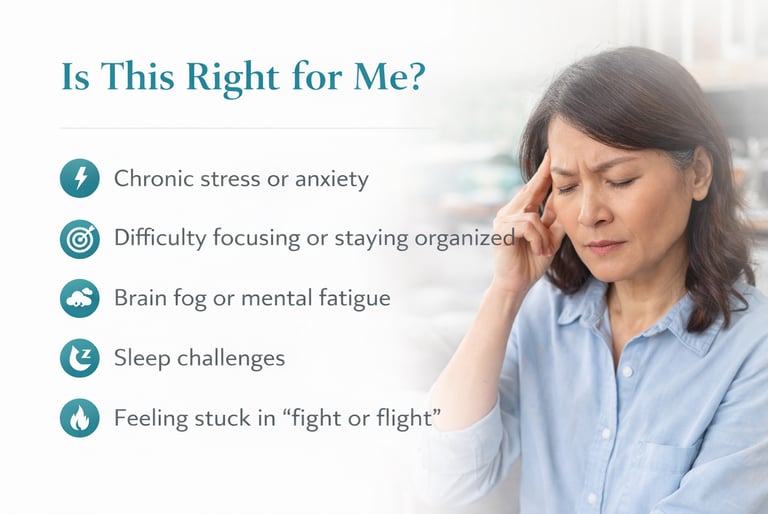
Neurofeedback may be a good fit for people who feel like their brain or nervous system is not functioning the way they want it to.
At Clear Mind Idaho, clients often seek neurofeedback support for concerns related to:
Stress and overwhelm
Focus and attention challenges
Mood regulation
Nervous system dysregulation
Recovery support after periods of chronic stress
Neurofeedback can be used by both children and adults. Because every person’s story is different, the best place to start is with a conversation about your goals, symptoms, and whether this approach feels like a good fit for you.





Ready to Learn if Neurofeedback Is Right for You?
If you are curious about whether IASIS neurofeedback may be a good fit for you or your family, we would love to talk with you.
Schedule a free consultation to learn more about how neurofeedback works, what to expect, and whether it makes sense for your goals.
The Research

Neurofeedback Insights
Additional research articles exploring the power of brain training, neurofeedback, and biofeedback can be found at ISNR.org
Frequently Asked Questions
What is neurofeedback?
Neurofeedback is a non-invasive approach designed to support the brain’s ability to regulate itself. It measures brainwave activity and provides gentle feedback to encourage more balanced and efficient brain function.
What is IASIS neurofeedback?
IASIS neurofeedback is a form of microcurrent neurofeedback that uses extremely low-level electrical signals—similar to the brain’s natural activity—to support improved brain regulation. It is designed to gently encourage the brain to shift out of stuck patterns.
How does neurofeedback work?
Neurofeedback works by measuring brainwave activity through sensors placed on the scalp and delivering a gentle signal back to the brain. This feedback helps the brain recognize its current patterns and make adjustments toward more balanced function.
What does neurofeedback feel like?
IASIS neurofeedback is typically very gentle. Most people feel little to nothing during the session, while some notice a sense of calm, relaxation, or mental clarity afterward.
Is neurofeedback safe?
IASIS neurofeedback is a non-invasive approach that uses extremely low-level signals. It is designed to be gentle and supportive, though individual experiences may vary.
Who can benefit from neurofeedback?
People often explore neurofeedback for support with stress, anxiety, focus challenges, sleep issues, mood regulation, and overall nervous system balance. It can be used by both children and adults.
How many sessions will I need?
The number of sessions varies depending on your goals and individual needs. Many people begin with a series of sessions to support more lasting changes. This is something we can walk through during your consultation.
Is neurofeedback the same as therapy or medication?
No. Neurofeedback is different from therapy and does not involve medication. It is a technology-based approach that focuses on supporting brain regulation rather than providing talk therapy or prescribing treatments.
Still have questions?
We’re happy to walk you through everything and help you decide if this is a good fit.
Phone
clearmindstaff@gmail.com
208-999-0541
© 2025. All rights reserved.
2971 E Copper Point Dr. Ste. 125
Meridian, ID 83642
Our Office
This site is for informational and educational purposes only. The information contained on this site does not constitute the rendering of healthcare advice or treatment recommendations. Browsing this site does not establish a professional relationship with our clinic. The information contained on this website has not been evaluated by the F.D.A. and is not intended to treat, diagnose or cure any disease.