
Concussion & TBI Support with Neurofeedback
in Meridian, Boise, and the Treasure Valley

When Your Brain Still Doesn’t Feel Like Itself After a Concussion
Even after the scans are normal and the injury is considered “healed,” many people continue struggling with symptoms that affect everyday life.
Brain fog. Headaches. Sensory overload. Sleep issues. Irritability. Anxiety. Difficulty focusing. Feeling emotionally “off.”
At Clear Mind Idaho, we use gentle, non-invasive neurofeedback and nervous system support to help the brain regulate more efficiently after concussion and traumatic brain injury (TBI).
Our approach is designed to support the brain’s natural ability to recover — without medications, effort-based exercises, or overwhelming stimulation.
Schedule a free consultation to learn whether neurofeedback may be a good fit for concussion recovery support.
Why Symptoms Can Continue After a Concussion
A concussion can disrupt how the brain and nervous system communicate and regulate.
For some people, symptoms improve quickly. For others, the brain can remain stuck in a stressed or dysregulated state long after the injury itself.
This may show up as:
Brain fog or slowed thinking
Difficulty concentrating
Memory problems
Headaches or migraines
Sensitivity to light or sound
Emotional overwhelm or irritability
Anxiety or panic symptoms
Fatigue or burnout
Dizziness or overstimulation
Feeling “not like yourself”
These symptoms are real — and often frustrating when traditional approaches haven’t fully helped.


How Neurofeedback May Help After a Concussion
At Clear Mind Idaho, we use IASIS microcurrent neurofeedback to support nervous system regulation and brain recovery.
Unlike traditional neurofeedback that may require active training or intense focus, IASIS uses extremely low-level signals designed to help the brain recognize and shift out of unhealthy patterns.
Many patients describe sessions as calming, gentle, and effortless.
Our goal is not to “force” the brain to work harder.
It is to help the brain become more flexible, regulated, and resilient.
People often seek care for symptoms including:
Post-concussion brain fog
Cognitive fatigue
Emotional dysregulation
Sleep changes
Headaches and migraines
Sensory overwhelm
Stress response after injury
Sports-related concussion recovery
Lingering symptoms after mild TBI


A Nervous System Approach to Recovery
Concussion symptoms are not always just about the injury itself.
Often, the nervous system remains stuck in a heightened stress or survival response long after the event.
This can leave people feeling constantly overstimulated, reactive, exhausted, or unable to fully recover.
Our approach focuses on supporting regulation of the brain and autonomic nervous system so the body can move out of survival mode and into recovery.


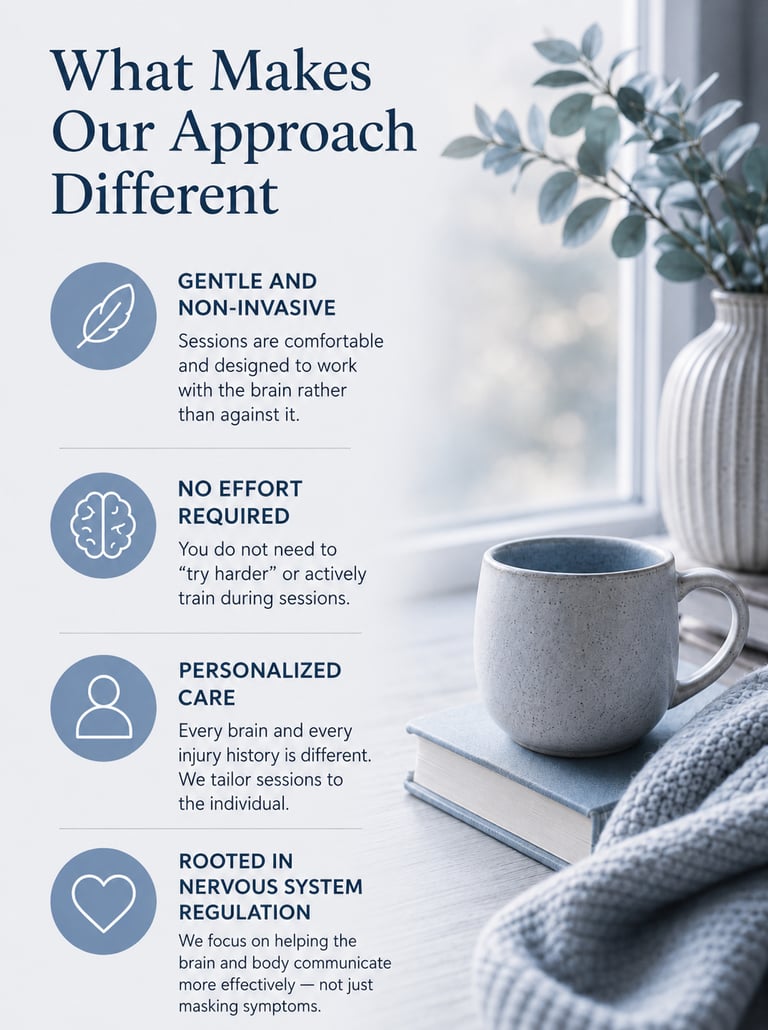
What Makes Our Approach Different
Gentle and Non-Invasive
Sessions are comfortable and designed to work with the brain rather than against it.
No Effort Required
You do not need to “try harder” or actively train during sessions.
Personalized Care
Every brain and every injury history is different. We tailor sessions to the individual.
Rooted in Nervous System Regulation
We focus on helping the brain and body communicate more effectively — not just masking symptoms.
Who We Work With
We commonly work with:
Adults recovering from concussion
Athletes with sports-related head injuries
Teens struggling after school or sports concussions
Individuals with lingering post-concussion symptoms
People experiencing cognitive fatigue or overstimulation
Individuals looking for non-medication support options


Start With a Free Consultation
You do not have to keep pushing through brain fog, overstimulation, or feeling unlike yourself.
If you are looking for concussion or TBI support in Boise or Meridian, Idaho, we would be happy to answer your questions and help you explore whether neurofeedback may be a good fit.
Frequently asked Questions
Is neurofeedback safe after a concussion?
Neurofeedback is non-invasive and designed to gently support brain regulation. Every individual is different, which is why we begin with a consultation to discuss symptoms, history, and goals.
How many sessions does it take?
Every person responds differently depending on symptom severity, injury history, nervous system stress, sleep, and overall health. Some people notice changes quickly, while others improve more gradually over time.
Can this help months or years after a concussion?
Many people seek support long after the initial injury because symptoms never fully resolved. Neurofeedback may still be beneficial even if the concussion happened years ago.
Do you work with athletes and teens?
Yes. We commonly work with both adults and younger individuals experiencing post-concussion symptoms.
Phone
clearmindstaff@gmail.com
208-999-0541
© 2025. All rights reserved.
2971 E Copper Point Dr. Ste. 125
Meridian, ID 83642
Our Office
This site is for informational and educational purposes only. The information contained on this site does not constitute the rendering of healthcare advice or treatment recommendations. Browsing this site does not establish a professional relationship with our clinic. The information contained on this website has not been evaluated by the F.D.A. and is not intended to treat, diagnose or cure any disease.