

Children’s Mental Health Support with Neurofeedback
Gentle support for growing brains and developing nervous systems
in Meridian, Boise, and the Treasure Valley

For infants, children, and teens
It’s Not Just Behavior—Kids Need Support Too.
Because when the nervous system feels more regulated, everything else can start to shift.
✔ Non-invasive ✔ Medication-free ✔ Kid-friendly sessions
When Kids Struggle, It’s Not Just Behavior
Children don’t always have the words to explain what they’re feeling.
Instead, it can show up as:
Big emotions
Difficulty focusing
Trouble sleeping
Sensory overwhelm
Meltdowns or shutdowns
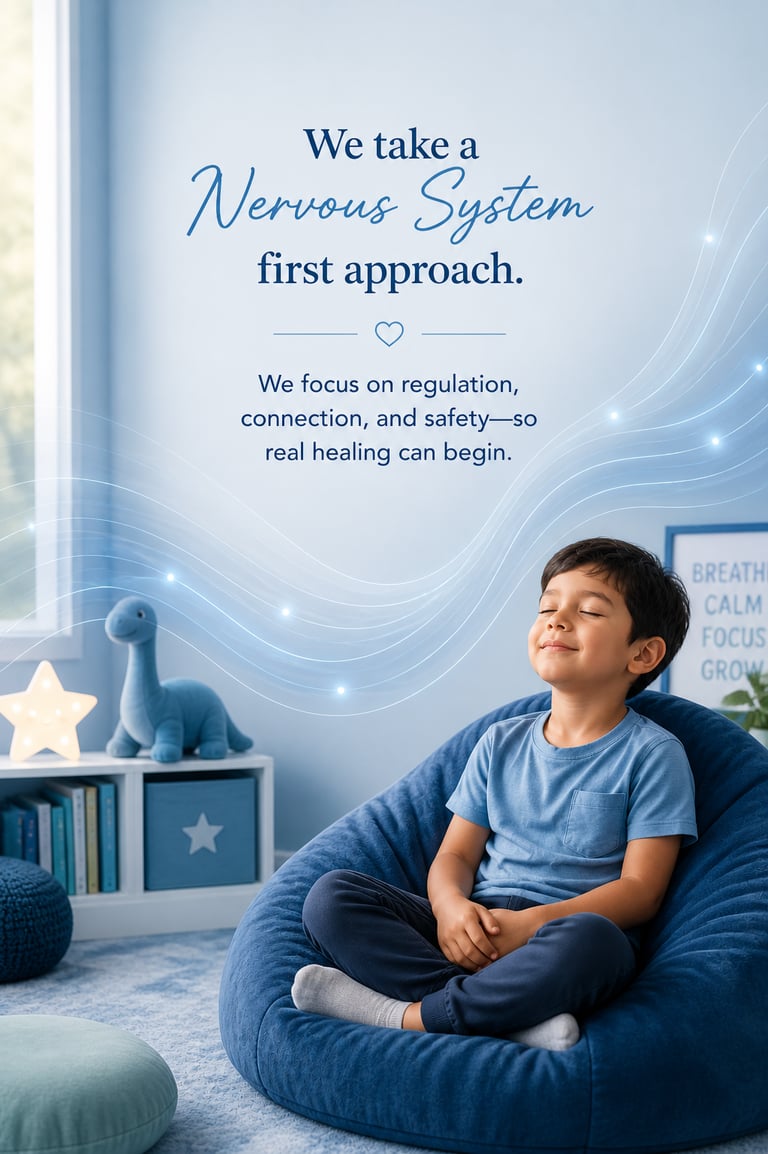
At Clear Mind Idaho, we look beyond behavior—and focus on what may be happening within the brain and nervous system.


A Brain-Based, Gentle Approach
Neurofeedback is designed to support the brain’s ability to:
Regulate emotions
Process stress
Improve focus and attention
Settle into calmer states
It’s:
Non-invasive
Medication-free
Quick and kid-friendly
Does not require talking about feelings or experiences
Many families choose this approach when traditional methods feel overwhelming, ineffective, or not the right fit for their child.

Who This May Help
This approach is often sought out for children who experience:
Difficulty with attention or focus
Emotional outbursts or frequent meltdowns
Anxiety or constant worry
Trouble falling or staying asleep
Sensory sensitivities
Difficulty calming down after being upset
Challenges with transitions or changes in routine
Signs of nervous system dysregulation
Every child is different, which is why we begin with a personalized intake and assessment.


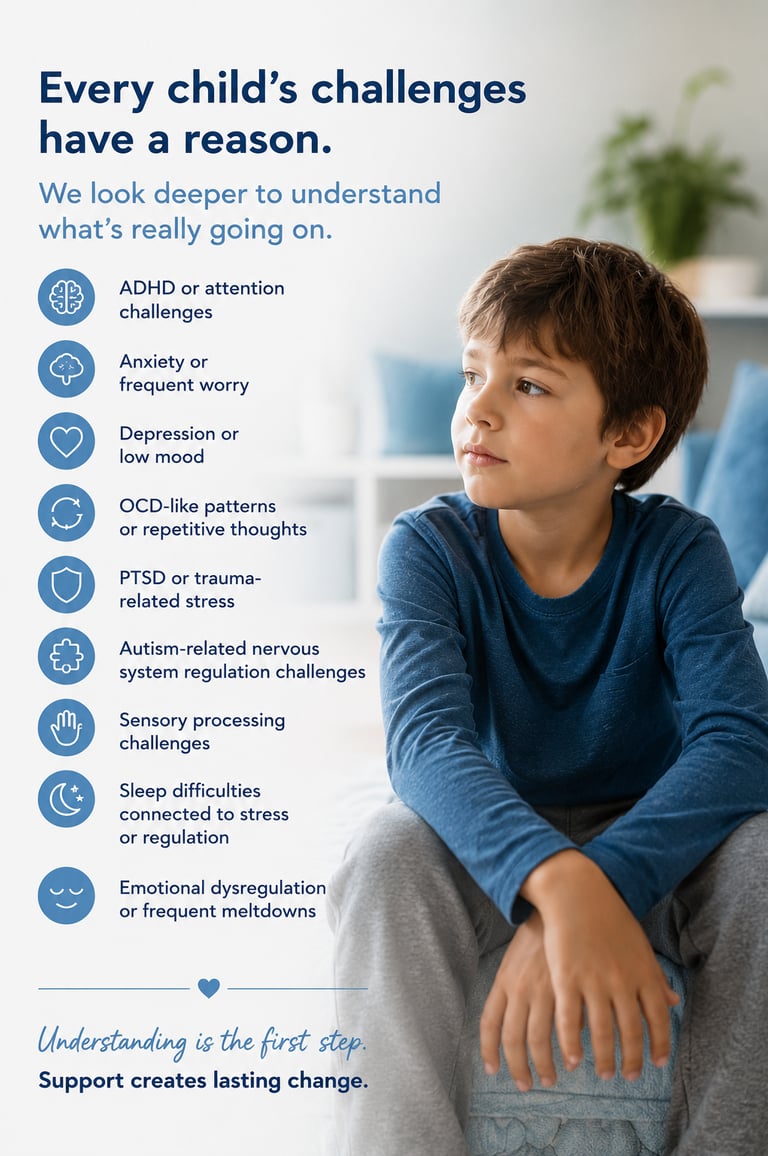
Common Childhood Mental Health Diagnoses Families Ask Us About
Many families come to Clear Mind Idaho because their child has been diagnosed with, or shows symptoms related to:
ADHD or attention challenges
Anxiety or frequent worry
Depression or low mood
OCD-like patterns or repetitive thoughts
PTSD or trauma-related stress
Autism-related nervous system regulation challenges
Sensory processing challenges
Sleep difficulties connected to stress or regulation
Emotional dysregulation or frequent meltdowns
A diagnosis can help families better understand what their child is experiencing, but it does not always explain the whole picture.
At Clear Mind Idaho, we focus on supporting the brain and nervous system underneath the symptoms. Our goal is not to label your child, but to help their system move toward greater balance, regulation, and resilience.
Neurofeedback Helps Support Your Child — It Does Not Change Who They Are
One of the most common concerns parents have is:
“Will this change my child’s personality?”
The answer is no.
Neurofeedback is not designed to make kids passive, flat, “zoned out,” or unlike themselves. It does not sedate the brain or force a child into a different personality.
Instead, neurofeedback is designed to support the brain’s natural ability to self-regulate.
For many children, that may look like:
Recovering more quickly after big emotions
Having more space between a feeling and a reaction
Settling more easily after stress or overstimulation
Sleeping more soundly
Feeling less overwhelmed by everyday demands
Accessing their strengths with less nervous system “noise” in the way
It is also important to set realistic expectations.
Neurofeedback is not meant to instantly turn a busy, energetic, or highly active child into a quiet, still, perfectly compliant one. Your child may still be active, curious, strong-willed, silly, sensitive, creative, and full of personality.
That is the point.
We are not trying to change who your child is.
We are helping support the nervous system so your child may feel more regulated, more settled, and more able to be themselves.

Supporting the Whole Family
When a child is struggling, the entire family feels it.
Our goal is not just to support the child—but to help create more:
Calm moments
Connection
Predictability
Ease in daily routines
We aim to provide support that feels manageable for both kids and parents.

What to Expect at Clear Mind Idaho
Step 1: Free Consultation
We learn about your child, your concerns, and your goals.
Step 2: Intake & Brain-Based Assessment
We gather a baseline and create an individualized plan.
Step 3: Gentle Neurofeedback Sessions
Sessions are quick, comfortable, and designed to fit into busy family schedules.
Step 4: Ongoing Support
We monitor changes and adjust as needed, always keeping your child’s comfort first.


A Supportive Option—Not a Replacement for Care
Children’s mental health is complex.
Neurofeedback is not a replacement for therapy, medical care, or medication when those are needed.
Instead, it may be used alongside other supports to help the brain and nervous system function with more balance.

You Don’t Have to Wait Until It Gets Worse
Many families wish they had started sooner.
If something feels off, it’s okay to explore support early.
Start with a Free Consultation
Learn how neurofeedback may support your child’s brain and nervous system.
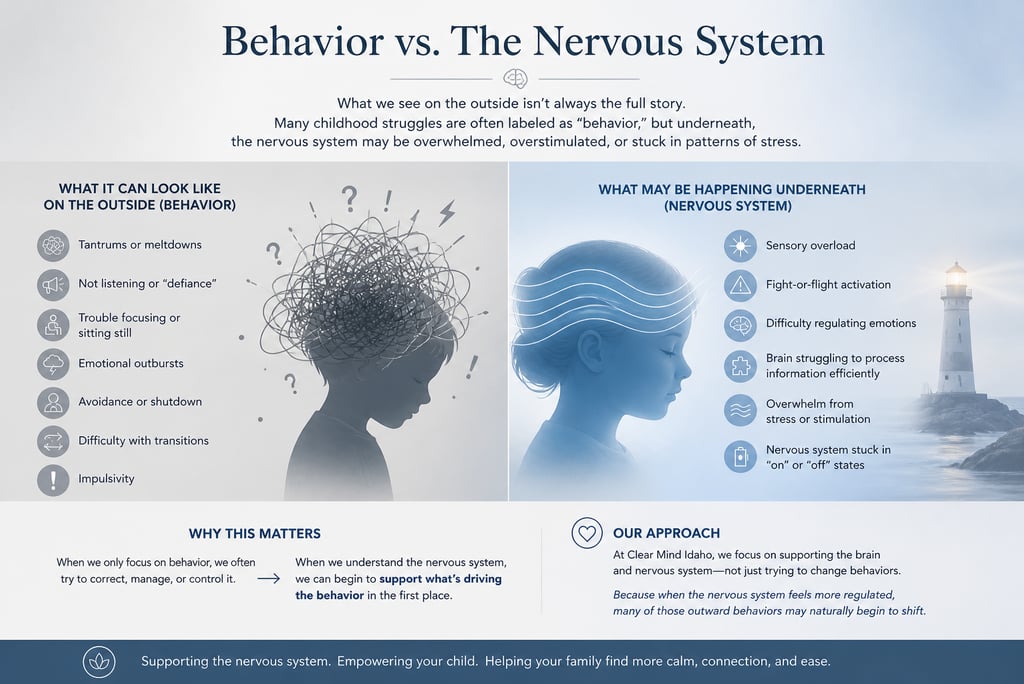
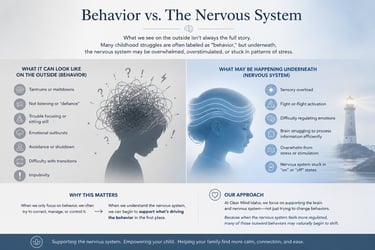
Behavior vs. The Nervous System
What we see on the outside isn’t always the full story.
Many childhood struggles are often labeled as “behavior,” but underneath, the nervous system may be overwhelmed, overstimulated, or stuck in patterns of stress.
What It Can Look Like on the Outside (Behavior)
Tantrums or meltdowns
Not listening or “defiance”
Trouble focusing or sitting still
Emotional outbursts
Avoidance or shutdown
Difficulty with transitions
Impulsivity
What May Be Happening Underneath (Nervous System)
Sensory overload
Fight-or-flight activation
Difficulty regulating emotions
Brain struggling to process information efficiently
Overwhelm from stress or stimulation
Nervous system stuck in “on” or “off” states
Why This Matters
When we only focus on behavior, we often try to correct, manage, or control it.
When we understand the nervous system, we can begin to support what’s driving the behavior in the first place.
Our Approach
At Clear Mind Idaho, we focus on supporting the brain and nervous system—
not just trying to change behaviors.
Because when the nervous system feels more regulated,
many of those outward behaviors may naturally begin to shift.
Frequently asked Questions
Is neurofeedback safe for children?
Neurofeedback is a non-invasive approach designed to gently support the brain and nervous system. Many families choose it because it does not involve medication and sessions are quick and well-tolerated by children.
What age can children start neurofeedback?
Children of many ages may be able to participate. We have worked with individuals ranging from infancy through adulthood.
For very young children, sessions are adapted to be gentle, brief, and supportive of their developing nervous system. We discuss what is appropriate for your child during your consultation.
Does my child need a diagnosis to start?
No. A diagnosis is not required. Many families seek support based on symptoms or challenges they are noticing.
What concerns do families seek neurofeedback support for?
Families often seek neurofeedback support for concerns related to:
Anxiety and worry
Emotional regulation
Sleep challenges
Sensory sensitivities
Stress and nervous system dysregulation
What does a session feel like for a child?
Sessions are quick and gentle. Your child simply relaxes while the system provides subtle feedback to the brain. There is no effort required from the child.
How many sessions does my child need?
Every child is different. Many families begin noticing shifts within the first several sessions, with a typical course often ranging from 12 to 30 sessions for more lasting changes.
Will this replace therapy or medication?
No. Neurofeedback is not a replacement for therapy, medical care, or medication when those are needed. It may be used alongside other supports as part of a broader care plan.
How do I get started?
We begin with a free consultation to learn about your child, your concerns, and your goals. From there, we can discuss whether neurofeedback may be a good fit.
Phone
clearmindstaff@gmail.com
208-999-0541
© 2025. All rights reserved.
2971 E Copper Point Dr. Ste. 125
Meridian, ID 83642
Our Office
This site is for informational and educational purposes only. The information contained on this site does not constitute the rendering of healthcare advice or treatment recommendations. Browsing this site does not establish a professional relationship with our clinic. The information contained on this website has not been evaluated by the F.D.A. and is not intended to treat, diagnose or cure any disease.